
Imagine finding a lucrative $250,000 public works project that fits your crew's expertise, only to realize you might be disqualified because you can't secure a bid surety bond due to a less-than-perfect credit score. It's a common frustration for growing contractors who have the skill but lack the pristine financial history that big-box insurers demand. You shouldn't lose out on a game-changing contract just because you've faced past credit challenges or haven't built a decade of history yet.
We know that your capacity to do the work is what matters most, and we're here to help you prove it. This guide will show you how to navigate the 2026 bonding market, overcome underwriting hurdles, and secure the guarantees needed to win high-stakes government and private contracts. You'll learn how to leverage new programs designed to expand bonding capacity, and discover how Hard 2 Place Bonds acts as your advocate, not a gatekeeper. We will walk through the essential links between bid, performance, and payment bonds so you can submit your next proposal with total confidence and a clear path to business growth.
Key Takeaways
- Understand how the three-party relationship between you, the project owner, and the surety protects the contract's integrity.
- Learn to prepare for standard bid bond requirements, which typically range from 5% to 20% of your total proposal price.
- Discover how to secure a bid surety bond even if you're facing high-risk triggers like low credit scores or tax liens.
- Compare transactional bonds with long-term bonding lines to find the right fit for your current project load and growth goals.
- Partner with an advocate who looks beyond a simple credit score to focus on your actual capability to get the job done.
What is a Bid Surety Bond and Why is it Critical for 2026 Contracts?
Winning a contract in 2026 requires more than just a competitive price; it requires proof of reliability. A bid surety bond acts as that proof. It's a legal guarantee that if you're the winning bidder, you'll actually sign the contract and provide the required follow-up security. Without it, most government and large-scale private project owners won't even look at your proposal. Failing to include this bond in your bid package usually leads to immediate disqualification, regardless of how well-qualified your crew might be.
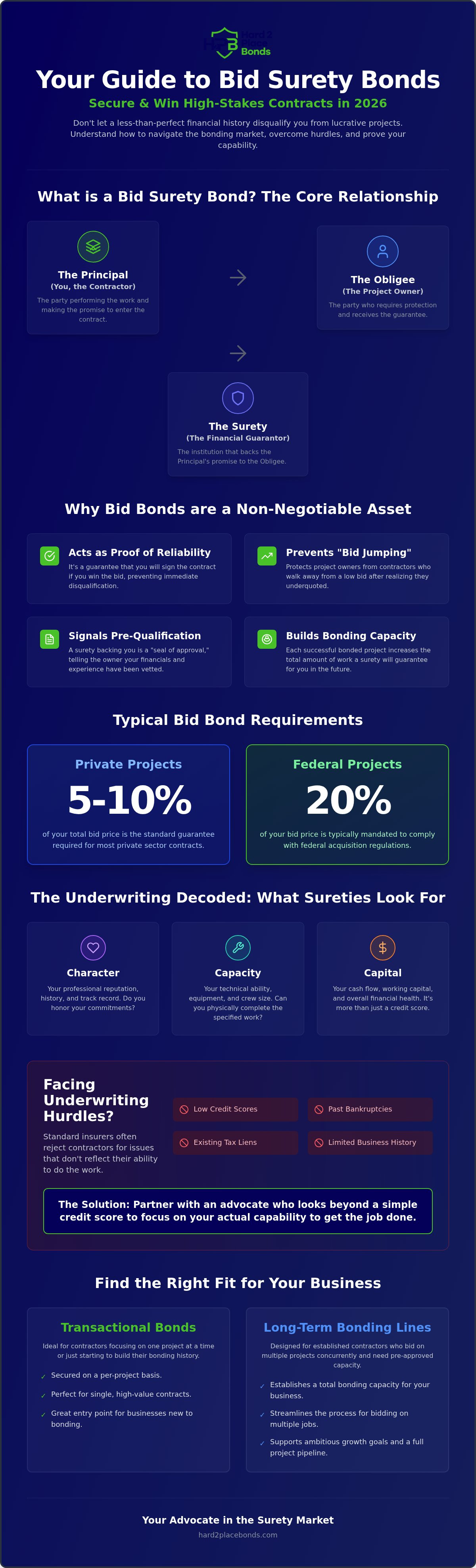
This bond creates a unique three-party relationship designed to shift risk away from the project owner. You are the Principal, the party performing the work. The Obligee is the project owner who needs protection. The Surety is the financial institution that backs your promise. To understand the legal specifics, it helps to look at What is a Bid Bond? and how it functions as a financial safety net. If you back out after winning, the surety compensates the owner for the difference between your bid and the next lowest one. This system filters out unqualified or financially unstable bidders before the project even starts.
How Bid Bonds Protect the Project Owner
A bid bond provides the project owner with financial recourse if a contractor fails to enter into a contract after being selected as the winner. This protection prevents "bid jumping," where a contractor walks away from a low bid after realizing they underquoted the job. The bond ensures the contract price is maintained throughout the selection process. It also guarantees that the contractor has the financial backing to transition into the necessary payment and performance bonds once the work begins. Without this bridge, owners would face massive delays and administrative costs if a selected bidder couldn't follow through.
The Link Between Bidding and Pre-Qualification
Securing a bond is a rigorous process that acts as a "seal of approval" for your business. When a surety backs you, they're telling the project owner that your financials, experience, and character are solid. This pre-qualification is often summarized in a formal letter included in your bid package, signaling to the owner that you've already been vetted by industry experts.
For many contractors, especially those who have faced rejection from standard carriers, obtaining bid bonds is the first step toward building a professional reputation. Every successfully completed project backed by a bond increases your "bonding capacity." This is the total dollar amount of work a surety is willing to guarantee for you at one time. By securing a bond now, you're not just winning one job; you're opening the door to larger, more lucrative contracts in the future.
How Bid Bonds Work: From Application to Contract Award
The journey from spotting a lucrative RFP to actually breaking ground involves a specific sequence of bonding steps. First, you must analyze the bid invitation to identify the bond percentage required. For private projects, this usually sits between 5% and 10% of your total bid. However, if you are pursuing federal work, you must comply with federal bid bond requirements, which typically mandate a guarantee of at least 20% of the bid price. Missing this detail can lead to your proposal being tossed out before it's even read.
Once you know the requirements, you'll submit your financial and project data to a surety underwriter. This stage often feels like the biggest hurdle for contractors with credit issues, but it's where an advocate makes the difference. If you're ready to move forward, you can start your application today to get an expert review of your file. After the underwriter approves the risk, they issue the bond, which you then submit as part of your formal bid package. If you win the award, the bid bond serves its final purpose by facilitating the transition to the necessary performance and payment guarantees required to start the job.
The Underwriting Process: What Sureties Look For
Underwriters evaluate what the industry calls the "Three Cs" to determine if they can back your business. First is Character; they look at your professional reputation and track record to ensure you're a person of your word. Second is Capacity, which measures your technical ability, equipment, and crew size to confirm you can physically complete the work. Finally, they assess Capital. This isn't just about a credit score; it's about your cash flow, working capital, and overall financial health. Even if one "C" is weak, a creative surety partner can often find ways to strengthen your application through other merits.
Understanding Bid Bond Costs and Percentages
You might be surprised to find that many sureties issue a bid surety bond for a small flat fee, and some may even provide them at no cost if they expect to handle the larger performance bonds later. The real financial weight lies in the "bid bond penalty." This is the amount the surety must pay the project owner if you win the bid but refuse to sign the contract or fail to provide the final bonds. Because the surety will seek reimbursement from you for any claims paid, understanding the total cost of your bonding program is vital. For a deeper dive into these financial structures, see our guide on How Much Does a Surety Bond Cost?
Securing a bid surety bond is a signal to the market that your business is stable and ready for high-stakes work. By following this structured path, you transform a complex requirement into a competitive advantage that helps you outshine less-prepared bidders.
Navigating Bid Bond Requirements for High-Risk and Bad Credit Contractors
Standard surety companies often operate like automated machines. If your credit score falls below a specific threshold or you have a tax lien on your record, you're usually met with a flat refusal. This is the reality of "hard-to-place" bonds. Traditional carriers aren't equipped to look at the context behind a financial setback; they only see the risk. This rigid approach leaves many capable contractors feeling marginalized and unable to compete for the contracts they're qualified to perform.
When you need a bid surety bond but don't fit the "perfect applicant" mold, you need an underwriter who acts as an advocate. Common triggers for rejection include credit scores below 640, recent bankruptcies, or a lack of significant project history. We look beyond these numbers to find a path to approval. This often involves utilizing tools like funds control or specific collateral arrangements. These methods mitigate the surety's risk while giving you the chance to prove your reliability on a high-stakes project.
Overcoming a Low Credit Score
In specialized underwriting, your credit score is a starting point rather than the final word on your business's potential. If your score is low, you can offset this concern by providing strong project references and proof of successful past performance. Transparency is your greatest asset in this process. Being upfront about past financial hurdles allows us to build a case for your bad credit surety bonds based on your current reliability and work quality rather than a static number from a credit bureau.
Strategies for New or Emerging Contractors
New businesses often struggle because they haven't yet built the deep financial history that underwriters crave. One effective way to bridge this gap is through personal indemnity, where you personally guarantee the bond alongside your company. This personal commitment helps you secure a bid surety bond for projects that might initially seem out of reach. You should also consider the SBA Surety Bond Guarantee Program, which helps small businesses secure bonding that they might not otherwise qualify for in the standard market. Starting with smaller "quick-bond" programs allows you to build a track record of successful completions. Working with a national surety bond broker ensures you have access to niche markets and underwriters who specialize in your specific industry hurdles.
A Contractor’s Buying Guide: Selecting the Right Bid Bond Program
Choosing the right bid surety bond program is a strategic decision that affects your company's trajectory. You shouldn't just look for the first provider who says "yes." Instead, evaluate how a program aligns with your long-term growth goals. If you only bid once or twice a year, a transactional approach might work for your current needs. However, if you're looking to scale, you need a partner who understands the nuances of high-stakes contracts and specialized underwriting. Watch for red flags like providers who only offer "perfect credit" solutions or agents who seem confused by the link between bid and performance bonds. A specialized advocate will look for ways to say "yes" when others have already walked away.
Transactional Bonds vs. Annual Bonding Lines
A transactional bond is a one-off guarantee for a specific project. It's often the best entry point for a new contractor or someone bidding on a unique, isolated job. For frequent bidders, establishing a permanent bonding line is a game-changer. A bonding line acts like a pre-approved credit limit for your bonds. It simplifies the bid bond application process significantly because the surety has already vetted your financials. When a deadline is looming, having a line in place means you can secure a bond in hours rather than days, giving you a massive competitive edge over contractors who are still waiting on paperwork.
Checklist for a Winning Bid Bond Application
Success starts with preparation. Before you reach out to an agent, ensure your internal house is in order to avoid delays. Underwriters appreciate transparency and organization, especially when they're looking at a complex or high-risk file. Use this checklist to stay ahead of the competition:
- Gather Project Specs: Have the bid invitation, specific bond forms, and bid dates ready for review.
- Update Your Resume: Prepare a detailed list of completed work that mirrors the scope and size of the project you're bidding on.
- Maintain an Accurate WIP: Your Work-In-Progress (WIP) schedule should be current to show you have the manpower and cash flow to handle more work.
- Verify Accounting: Ensure your year-end and interim financial statements are ready for underwriter scrutiny.
If you're tired of being told "no" by standard agencies that don't understand your business, it's time to work with a specialist who knows how to navigate these hurdles. You can submit your project details here to see which bonding program fits your business best.
Securing Your Bid Bond with Hard 2 Place Bonds: The Path to Approval
Many contractors feel marginalized by traditional surety carriers who rely on rigid algorithms and automated "no" responses. At Hard 2 Place Bonds, we act as a tenacious advocate for businesses that don't fit the standard mold. Whether you've been rejected due to a low credit score, a lack of deep financial history, or a specialized industry niche, we focus on finding a resolution. We specialize in securing a bid surety bond for high-stakes projects when other brokers have given up; we position ourselves as the essential partner for your company's long-term growth.
Our national reach and deep expertise in contract surety allow us to move with the speed that high-stakes bidding requires. We understand that project deadlines don't wait for slow paperwork. By focusing our efforts on bid bonds and specialized risk assessment, we provide the efficiency you need to stay competitive in a fast-moving market. We've built our reputation on persistence and a refusal to accept a standard refusal as the final answer. This creates a sense of relief for our clients, who finally have a partner as committed to their success as they are.
Our Solution-Oriented Underwriting Philosophy
We believe your business's future shouldn't be held hostage by its past. Our underwriting team looks beyond historical credit data to evaluate the actual potential of the project and your technical capability to perform. You get direct access to experts who understand non-standard risks and complex financial structures. This consultative approach allows us to identify alternative paths, such as specific indemnity or collateral options, that standard agencies simply won't explore. Our goal is to find a path to "yes" that respects your professional expertise and your business ambitions.
Start Your Application Today
Securing the right guarantee shouldn't be a source of stress. We've designed a simple, direct intake process to get you from application to approval without unnecessary friction. Our team provides expert guidance through every stage of the contract surety bond process, ensuring you have the right documentation to satisfy even the strictest project owners. We know that every bid surety bond we secure is a stepping stone to your next major win. Don't let a past credit hurdle keep you from winning your next lucrative contract. Secure your bid bond now and stay in the running for your next contract.
Win Your Next High-Stakes Contract with Confidence
Securing a bid surety bond is more than just checking a box on a government RFP; it's a strategic move that proves your company's resilience and technical capability. We've explored how these bonds function as a critical pre-qualification tool and why a less-than-perfect credit score doesn't have to be the end of your bidding journey. By understanding the link between bid, performance, and payment bonds, you can position your business for sustainable growth in a competitive 2026 market.
Hard 2 Place Bonds stands ready as your advocate. Our specialized high-risk underwriting experts look beyond simple credit scores to find solutions that standard carriers miss. With national coverage for all contract types and a solution-oriented approach to bad credit approvals, we provide the speed and persistence needed to meet tight submission deadlines. You don't have to navigate these hurdles alone. Start your bid bond application with Hard 2 Place Bonds today and take the first step toward winning your next lucrative project. Your business has the talent to do the work; let us help you secure the guarantee that proves it.
Frequently Asked Questions
Can I get a bid bond with a 500 credit score?
Yes, it is possible to secure a bid bond with a 500 credit score through specialized high-risk underwriters. While traditional carriers often set a hard cutoff at 650 or 700, we focus on the project's merit and your technical experience. We look for alternative ways to strengthen your application, such as personal indemnity or funds control. This ensures you can still compete for lucrative contracts despite past financial hurdles.
How much does a bid surety bond cost?
Most bid bonds are issued for a small flat fee or even at no cost to the contractor. This is because the surety views the bid bond as a pre-qualification step for the more substantial performance and payment bonds that follow. If there is a fee, it's typically nominal compared to the total contract value. We work to keep these costs accessible so you can focus your capital on the actual project bid.
What happens if I win the bid but can't provide the performance bond?
If you win the bid but fail to provide the required performance bond, the project owner can make a claim against your bid surety bond . The surety will pay the owner the difference between your bid and the next lowest one, up to the bond's limit. Because you are legally obligated to reimburse the surety for this payout, it is vital to ensure your final bonding capacity is confirmed before you submit your proposal.
Are bid bonds required for all government construction projects?
Bid bonds are mandatory for all federal public works contracts exceeding $150,000 under the Miller Act. Many states have similar "Little Miller Acts" with lower thresholds. For example, North Carolina requires bonds for work over $50,000. For projects below these limits, the owner might still request a bond to ensure the selected contractor is financially stable and capable of completing the work as promised.
How long does it take to get a bid bond approved?
Approval times vary, but a specialized advocate can often secure a bid surety bond in 24 to 48 hours. If you have an established bonding line, the process is even faster, often taking just a few hours. For high-risk or complex applications, gathering your financial statements and work history in advance is the best way to speed up the underwriter's review and meet tight submission deadlines.
Is the bid bond amount returned after the contract is awarded?
No, the bid bond itself is not a cash deposit that gets returned. It is a legal guarantee provided by a surety company. Once the contract is awarded and the winning bidder provides the necessary performance and payment bonds, the bid bond simply expires or is released by the project owner. If you paid a service fee to the surety or broker for issuance, that fee is non-refundable as it covers the administrative costs.
What is the difference between a bid bond and a performance bond?
A bid bond guarantees that you will sign the contract if you win, while a performance bond guarantees that you will complete the work according to the contract terms. The bid bond is submitted with your proposal to show you are a serious bidder. The performance bond is issued after you win the award to protect the project owner from financial loss if your company fails to finish the job as agreed.
Do I need a separate bid bond for every project I bid on?
Yes, you generally need a unique bid bond for each specific project because the bond amount is tied to your specific bid price for that job. Each bond form usually includes the project name, location, and the name of the project owner. Establishing a permanent bonding line allows you to request these individual bonds quickly through a streamlined process, making it much easier to bid on multiple projects simultaneously.